


One of the most memorable essays I’ve ever read is “Scott And Scurvy” (2010) by Maciej Cegłowski about how the cure for scurvy was lost.
In 1911, a British expedition to Antarctica included a doctor who lectured confidently about scurvy, yet his understanding of the disease was completely wrong. This seems baffling because scurvy had supposedly been “cured” over 150 years earlier. In 1747, Scottish physician James Lind demonstrated that citrus fruits could treat the disease, and by 1799, the Royal Navy required daily lemon juice for sailors. Scurvy had virtually disappeared from British ships following that intervention.
“Somehow a highly-trained group of scientists at the start of the 20th century knew less about scurvy than the average sea captain in Napoleonic times… in the second half of the nineteenth century, the cure for scurvy was lost. The story of how this happened is a striking demonstration of the problem of induction, and how progress in one field of study can lead to unintended steps backward in another.”
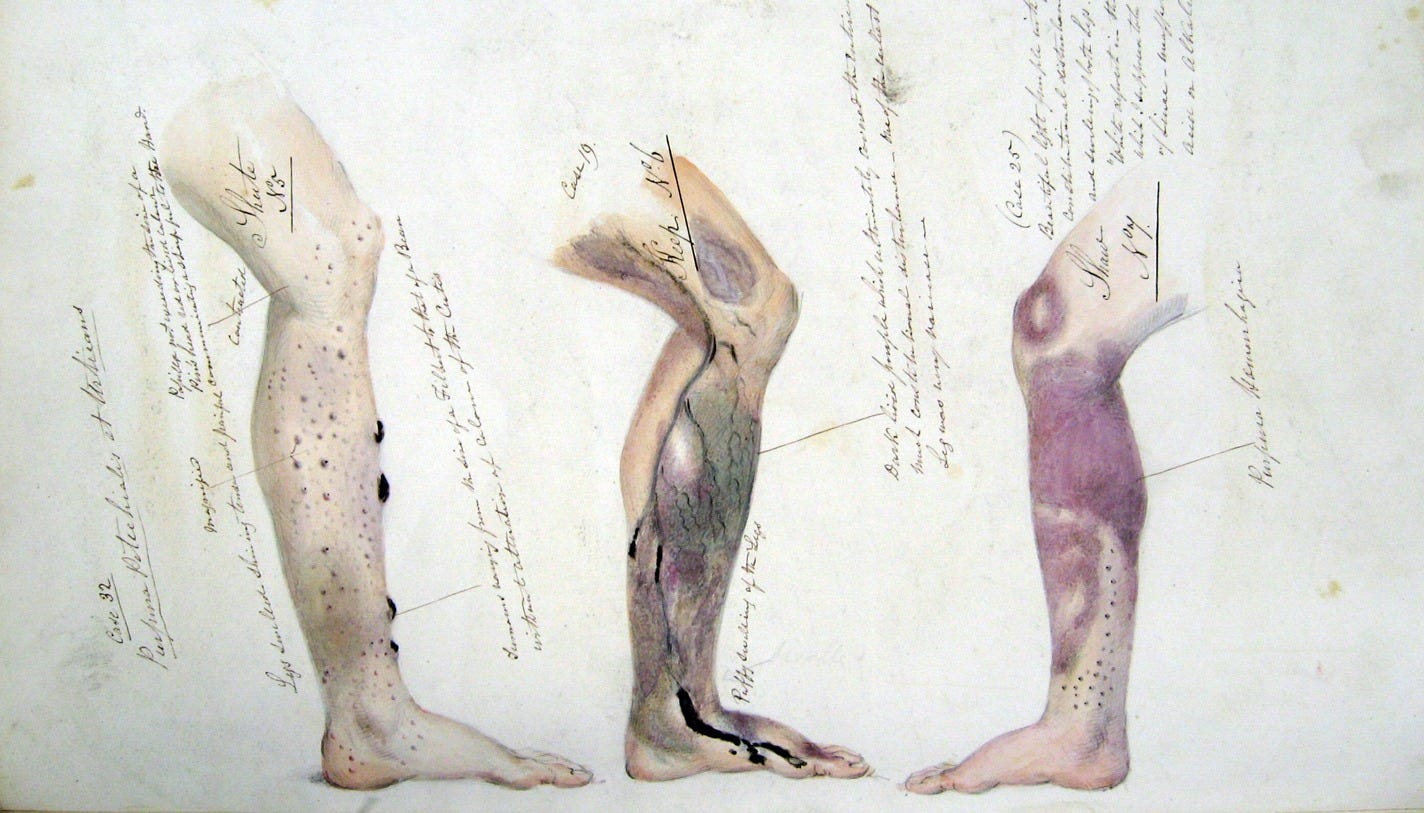
Scurvy is a serious and potentially fatal disease caused by vitamin C deficiency. Gums become swollen and purple, teeth loosen, old wounds reopen, and limbs swell and blacken. Death eventually follows. Fresh fruits, vegetables, and even fresh meat contain vitamin C, and restoring it to the diet quickly cures the disease. Eighteenth-century doctors understood this in terms of the curative powers of citrus fruit, in particular lemon juice, without having any knowledge of the existence of vitamin C. The citrus cure worked spectacularly and scurvy became very rare in the British Royal Navy after citrus requirements were implemented. Several factors worked in combination to cast the citrus cure into doubt.

First, steam-powered ships shortened voyages so substantially that sailors rarely spent enough time without fresh food to develop scurvy. The disease became rare, which meant fewer people witnessed citrus cures working.
Second, the navy quietly substituted an ineffective remedy for an effective one. In 1860, they switched from Mediterranean lemons to West Indian limes, a substitution based on colonial trade convenience that seemed harmless since both were citrus fruits. “Moreover, as there was a widespread belief that the antiscorbutic properties of lemons were due to their acidity, it made sense that the more acidic Caribbean limes would be even better at fighting the disease.”
But limes contain only a quarter of the vitamin C that lemons do. Worse, the lime juice was stored in copper-lined containers and left exposed to air, which destroyed what little vitamin C remained. By the 1870s, sailors were drinking something essentially useless while believing they were protected.
Third, medical theory evolved in ways that obscured the truth. Bacteria had recently been discovered as the cause of diseases like tuberculosis and cholera. The germ theory of disease was revolutionary science. Doctors began wondering whether scurvy, too, might be a bacterial disease rather than a nutritional one. A theory emerged that scurvy came from “ptomaines,” hypothetical toxic substances produced by bacteria in preserved meat. Fresh food prevented scurvy not because it contained some vital nutrient, but because it wasn’t contaminated.
This theory actually made sense given the evidence available. Fresh meat did prevent scurvy (organ meats are rich in vitamin C), while preserved meats didn’t, while citrus fruit in the form of West Indian limes seemed an unreliable preventative and curative treatment. The theory correctly predicted what foods would help, even though its explanation was completely wrong.
“This pattern of fresh meat preventing scurvy would be a consistent one in Arctic exploration. It defied the common understanding of scurvy as a deficiency in vegetable matter. Somehow men could live for years on a meat-only diet and remain healthy, provided that the meat was fresh. This is a good example of how the very ubiquity of vitamin C made it hard to identify. Though scurvy was always associated with a lack of greens, fresh meat contains adequate amounts of vitamin C, with particularly high concentrations in the organ meats… But unless you already understand and believe in the vitamin model of nutrition, the notion of a trace substance that exists both in fresh limes and bear kidneys, but is absent from a cask of lime juice because you happened to prepare it in a copper vessel, begins to sound pretty contrived.”
These mistaken ideas shaped how polar expeditions prepared for long journeys across the ice, with at times disastrous results. I will refer you to the Cegłowski essay for those details, especially expeditions by Robert Scott.
The actual cause of scurvy was found again through pure luck. Scientists studying beriberi (another deficiency disease) in pigeons decided to switch to guinea pigs. They happened to choose one of the only animals besides humans and monkeys that cannot make its own vitamin C. When fed a grain-only diet, the guinea pigs developed scurvy, and researchers were able to create an animal model of scurvy for the first time. By 1932, vitamin C was definitively identified.
Cegłowski notes that throughout these centuries of confusion, doctors rarely admitted ignorance. Scurvy could be explained by whatever theory was fashionable, imbalanced humors, bad air, acidified blood, bacterial infection. Physicians always sounded confident, even when they were wrong.
The evidence by itself didn’t point clearly to the truth. Without the concept of a “vitamin,” the same observations could support multiple theories. Fresh meat preventing scurvy seemed to confirm the ptomaine theory just as easily as it confirmed the deficiency theory. Knowing which results to trust and which to explain away required concepts that didn’t yet exist.
“Now that we understand scurvy as a deficiency disease, we can explain away the anomalous results that seem to contradict that theory (the failure of lime juice on polar expeditions, for example). But the evidence on its own did not point clearly at any solution. It was not clear which results were the anomalous ones that needed explaining away. The ptomaine theory made correct predictions (fresh meat will prevent scurvy) even though it was completely wrong.”
“It was not clear which results were the anomalous ones that needed explaining away” is an important sentence that bears repetition.
Steam power made voyages safer but allowed the switch to ineffective lime juice to go unnoticed for quite some time. Pasteurization protected infants from bacterial infection but destroyed the vitamin C in their milk, causing outbreaks of infantile scurvy among wealthy families who could afford the “best” processed foods.
We assume knowledge, once gained, stays with us. But holding onto truth requires constant effort. A disease that killed millions, with an unambiguous cure known for centuries, still managed to confound humanity for decades.
Let’s reflect on some parallels between the history of scurvy and its cure and the current ignorance about the causes of mental disorders and the messy, inconsistent literature on when and how treatments for mental disorders help people. Like physicians treating scurvy in the late 19th century, psychiatry’s current situation is also one of profound ignorance and trial and error.