


“Mixed Bag” is a series where I ask a guest to select 5 items to explore a particular topic: a book, a concept, a person, an article, and a surprise item (at the expert’s discretion). For each item, they have to explain why they selected it and what it signifies. — Awais Aftab
Andrés Delgado-Ron, MD, MSc, is a social epidemiologist specialized in causal inference. He currently works at Simon Fraser University. A Senior Data Analyst for the Healthy Ecologies and Lifestyle Lab, his current research focuses on the health effects of loneliness and the long-term effects of psychedelics. In exploring the latter, he found similarities with another type of mystical experience. Andrés writes on Substack at The (Meta)Physicians and can also be found on Bluesky.
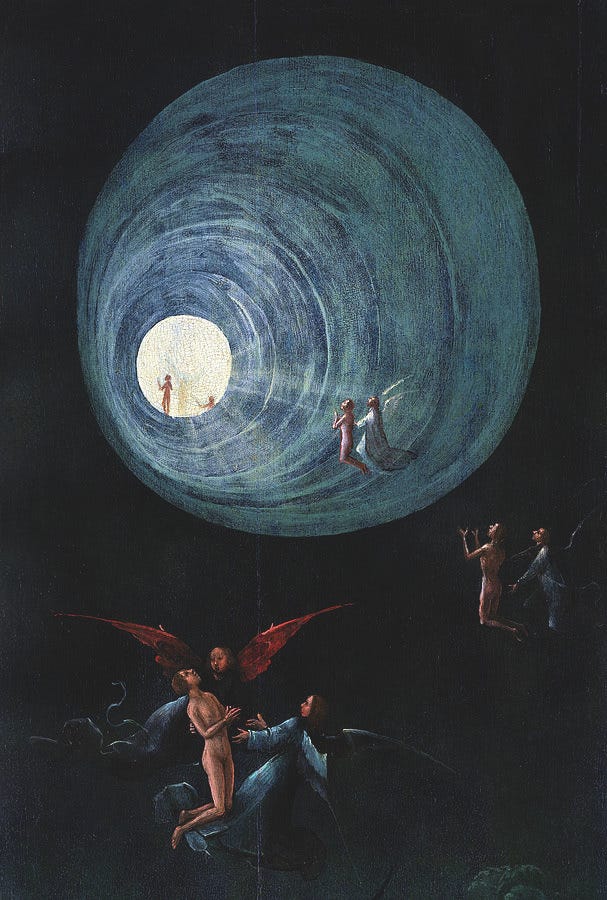
My entry point into near-death experiences (NDEs) was one of deep skepticism. Like many, I assumed that the memories people brought back from the brink of death were a special type of fantasy concocted by the brain under severe stress. To this day, this is the most common response I get when talking about NDEs. We say “severe stress” because prospective studies have placed electrodes in the scalps of dying patients and registered nothing. Yet, these people wake up and talk about what happened between the moment they had a cardiac arrest and the successful end of the resuscitation.
Whereas most people place their hope in the physiological crisis hypothesis, the NDE phenomenology doesn’t support this. Many healthy people experience the set of events that we use to classify people as near-death experiencers (typically measured through Greyson’s NDE scale). The so-called “fear-death” experience, for example, occurs when someone is subjectively at risk of death, but escapes without a scratch. In other words, a subset of people get scared to death, but are otherwise healthy and they have an NDE. The same thing can be said about “shared death experiences.” Here on Substack I recently shared a nurse’s account of how he suddenly experienced his mom’s passing moments before she actually died. He was not really “afraid” at the moment or even aware of her dying process, he was just taking a cab. His case is not isolated and it makes it hard to frame these experiences as psychological crises.
Despite the puzzling attributes of this wide range of end-of-life experiences, most skeptics agree that we cannot really tell the cause, but it “must be some kind of hallucination,” akin to psychedelic experiences (and there is some truth to that, but sadly we will need to discuss that topic on another occasion). It seems so straightforward that it would be silly even to test that hypothesis. Yet, NDEs resist simplicity and medical doctors have reported credible cases of genuine out-of-body experiences. For example, the researchers behind the AWAreness during Resuscitation (AWARE) study—a prospective cohort study that sought to verify out-of-body perception during NDEs—wrote:
“our verified case of visual awareness when cerebral function is ordinarily absent or at best severely impaired is perplexing… our findings do not suggest that visual awareness in cardiac arrest is likely to be hallucinatory or illusory since the recollections [of the patient who was unconscious] corresponded with actual verified events.”
You can read it yourself.
Beyond these intriguing aspects, we care about NDEs because people consistently rate them as one of the most important moments of their lives. In spite of this, many health professionals are unprepared to confront them and present dismissive attitudes that can be harmful. Yet, NDEs often enhance psychological functioning and there is wide agreement that these experiences should not be pathologized, with very few exceptions. In fact, providing supportive, nonjudgmental space for discussion and helping patients articulate the emotional and existential impact of the event is what science advises.
Concept: Aphantasia
I started corresponding with William Domhoff a couple of months ago. Back in the day, he had dedicated years to the systematic examination of dream data (now available to the public through dreambank.net), and part of what motivated him to pursue his research was to find out if those who were born blind (or became so shortly after birth) could see in their dreams. In response to dubious claims to the contrary, he wrote in Do the Blind Literally “See” in Their Dreams? A Critique of a Recent Claim That They Do. Dreaming (with Nancy Kerr as first author): “There is no evidence that congenitally blind people experience waking or dreaming imagery of a visual character (as though seeing something with their eyes).”
I shared with him the findings of Visuo-spatial imagery in dreams of congenitally and early blind: a systematic review published in 2023. He felt vindicated. After two decades of sustained research, the review sustained his conclusion in slightly less certain terms: “The presence of visual imagery in the oneiric mentation in congenitally blind remains widely disputed, and highly debatable,” and later, “most studies failed to record reports of visual impressions in the dreams of congenitally blind individuals, with only visual impressions (color, light) reported in the dreams of congenitally blind subjects with residual vision.”
Separate data also suggest the congenitally blind cannot visually hallucinate. Using a whole-population cohort of 467,945 children born between 1980 and 2001, scientists from Western Australia identified 66 children with cortical blindness, none of whom developed psychosis or schizophrenia. Unironically, the study is underpowered to firmly establish a real effect, but I would be curious to know if the readers of Psychiatry at the Margins have found a case of congenital blindness among their psychotic patients. Rumor has it, there are none.
Coming back to NDEs, this congenital aphantasia is extremely useful because we cannot really run experiments about death (it is unethical to assign said intervention). The closest we have come to testing the hallucinatory hypothesis is to run some surveys about fantasy proneness to people who had just met god, a deceased loved one, seeing heaven, etc. Not precisely the best moment to ask. But if there are people out there that cannot hallucinate, now that is a counterfactual we can use. If NDEs among the blind are mostly haptic and visuospatial, like their dreams, then we can probably say NDEs are hallucinatory. But if they are not…
Article: Ring, K. & Cooper, S. (1997). Near-death and out-of-body experiences in the blind: A study of apparent eyeless vision. J. Near-Death Stud. 16(2):101–147.
Kenneth Ring is an American psychologist and the founding editor of the Journal of Near-Death Studies. In the nineties, he published the results of his investigation into the NDEs of the blind. Ring reached out to several organizations working with the blind. The recruiting materials were translated into braille and circulated among these organizations. He told a few colleagues about his study, too, in hope of recruiting further subjects. If someone reached out as a potential subject, they first screened to confirm both the blindness and the out-of-body (OBE) or near-death experience, and then they conducted formal interviews, recording and transcribing every sentence.
The study recruited 14 congenitally blind people, 11 of them were born prematurely and placed in incubators. He also recruited six participants who were legally blind from birth (i.e., they had sight but it was pretty bad). Finally, 11 people who lost their vision as adults were recruited and included in the study. For the most part, the reported NDEs matched what we know about these experiences, with life reviews, encounters with deceased loved ones, altered perception of time, etc. I mention this just to make it clear they were true NDEs.
In early 1973, Vicki, then 22, was working as an occasional singer in a nightclub in Seattle. One night, she could not find a taxi, so she asked one of the club clients for a lift. He was drunk. The crash sent her out of the Volkswagen bus, breaking her skull and giving her life-threatening injuries. She became unconscious:
“I was shocked. I was totally in awe. I mean, I can’t even describe it because I thought, “So that’s what it’s like!” But then I thought, “Well, it’s even better than what I could have imagined.” I had a hard time relating to it [i.e., seeing]. I had a real difficult time relating to it because I’ve never experienced it. And it was something very foreign to me... It was like hearing words and not being able to understand them, but knowing that they were words. And before you’d never heard anything.”
Nine (64%) out of 14 early blind subjects told Ring they saw during their NDE or OBE. The descriptions included seeing one’s own physical body, going through a tunnel or dark space, and seeing a radiant light. When asked to compare these experiences with their usual dream content, the study subjects answered that visual experiences were present only in their near-death experiences and out-of-body experiences.
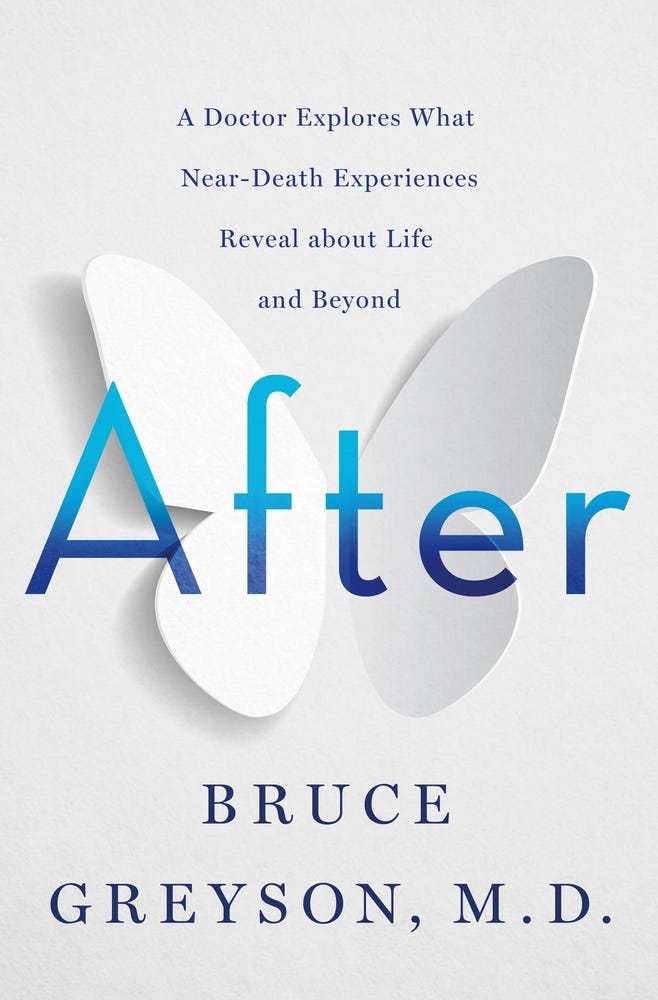
Book: Greyson, B. (2021). After: A doctor explores what near-death experiences reveal about life and beyond. Random House.
I am not under the illusion that the hallucinatory hypothesis of NDEs has been conclusively disproven. We need caution interpreting congenital blindness as a bulletproof form of aphantasia and epistemic humility about our capacity to interpret what the congenitally blind say is seeing as a form of visual perception (or something that comes close to it). But these results—along with the case-series of 128 veridical near-death experiences published by the International Association for Near Death Studies—certainly tilted me towards the “reality” of the NDE.
At the same time, I have a hard time accepting that I should believe every aspect of the NDE as recalled by the person reporting it. It is true that NDEs share core characteristics irrespective of age, gender, time elapsed since the experience was reported, geography, and culture. But this assertion is not universal. Leaving aside old studies in India which were conducted before we had a validated scale to separate NDEs from simple assertions, recent cross-cultural studies between Japanese and Western NDEs show some variation that we need to keep in consideration.
My personal recommendation to understand the extent to which NDEs are similar and different, and why that happens, is to read the semi-autobiographical account of Bruce Greyson’s career studying NDEs: After. I would love to tell you that reading the book is a complete delight, but I would be lying. Throughout the book, Bruce gives us countless examples of what a given NDE was like—which makes the book repetitive—interspersed with discussions of what these examples mean in practice as they relate to specific research questions, forcing the serious reader to take a break and hunt for a specific reference in the back of the book, where all of the sources are hidden without explicit footnotes.
“[O]ne of the first things many experiencers say is that there are no words to describe what they experienced… [When asked, many] turn to whatever cultural or religious metaphors they have available in order to describe things that don’t have familiar labels. For example, many Americans who have NDEs describe passing through a long, dark space they call a “tunnel.” Experiencers from less developed countries where runners are rare may label it a “well” or a “cave.” Dominic, a truck driver who had an NDE when his eighteen-wheeler collided with another vehicle on the interstate, described traveling through a long, dark “tailpipe,” what was the image that came most readily to him.”
But imperfect as it is, After manages to provide a comprehensive overview of how NDEs manifest, the clear limitations we have in studying them, what had been so far our best attempts, and the many ways in which we have failed to decisively conclude for, or against, a given hypothesis. This quality perhaps stands in contrast to the more assertive approach of scientists who have sought to explain as much as possible about NDEs, while setting aside aspects that remain difficult to account for within current neuroscientific frameworks.
Person: Charlotte Martial
“In the past, controversial dualistic theories have dominated the debate [about NDEs] owing to the seemingly paradoxical nature of generating a rich conscious experience during acute physiological crises. However, empirical data from different areas of neuroscience, including non-human studies, human studies involving psychedelics, and studies on the agonal brain, coupled with advances in technology that have facilitated in vivo investigations, are providing potential explanations for NDEs. These phenomena probably emerge from a combination of mechanisms, and a holistic approach integrating psychological, evolutionary and neurophysiological theories is now within reach.”
Martial, C., et al. (2025). A neuroscientific model of near-death experiences. Nature Reviews Neurology, 21(6), 297-311.
Charlotte Martial is recognized by many, including LLMs, as the leading researcher in the field of near-death experiences. When she published her Neurophysiological Evolutionary Psychological Theory Understanding Near-death Experience (NEPTUNE), she was already an accomplished researcher with more than ten years of experience in the area. Most of the work she cites in her theory is actually hers. She shared the first authorship of the evolutionary component, a work led by Dr. Daniel Kondziella; she explored the psychological correlates of NDEs herself (mainly fantasy proneness), and analyzed the similarities of NDEs and psychedelics with Christopher Timmermann and Robin Carhart-Harris, leading figures in psychedelic research. Currently, Martial leads a prospective study (within one intensive care unit) that studies the neurophysiology of people undergoing cardiac arrest as well as their memories. She is currently seeking funding to extend this study.
I met Martial earlier this year. She was one of the main speakers in the 15th edition of “Beyond the Brain,” an end-of-life symposium organized by BIAL Foundation. On my way to the airport—it is a long way from Ottawa to Montreal—I reviewed some of her papers and a couple of public lectures. She developed a framework to understand NDEs and other states of disconnected consciousness through three mutually exclusive dimensions: wakefulness, connectedness, and internal awareness. I know connectedness and wakefulness look like the same thing, but they are not. If a person truly leaves their body and is connected to the environment, but otherwise asleep, they need to be classified somewhere else.
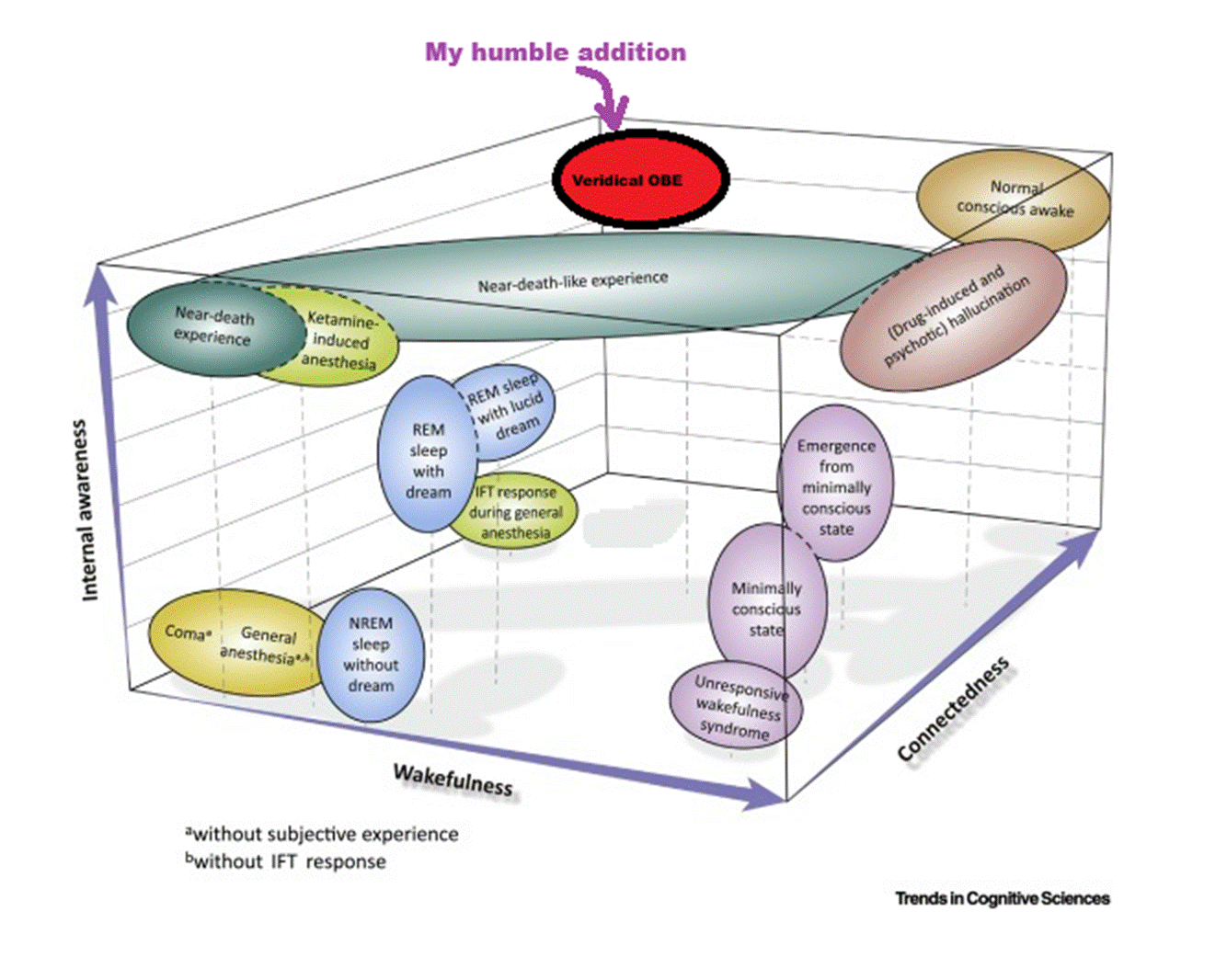
When I first started reading the NEPTUNE paper, I had very high expectations about the model. Sadly, the more I dug into its foundational studies, the less convinced I became about the overall strength of each and every component. I wrote a four-part series with my professional analyses here, which I expect to expand upon and publish somewhere (sadly, some of the original venues charge for publishing correspondence). A modified version of my last installment was recently published as a letter to the editor in Brain Communications. For those of you who want a quick summary, there is a big issue with reverse-causation bias, a conflation of NDE phenomenology with dissimilar experiences that had, indeed, been explained, and an outright dismissal of credible reports that do not fit our current understanding.
Yet, Martial’s research has been extremely valuable in advancing the field. Moreover, given her position as a knowledge bearer in a hard science (at least for those who consider neuroscience to be a harder science than psychiatry), journalists often invite her as a professional expert to counter the opinions of many researchers who, like me, acknowledge and embrace the weird (but credible) aspects of NDEs. Finally, as I already mentioned, she leads a prospective study, and it would be irresponsible not to familiarize yourself with her research and keep an eye on her latest publications, even if some of us think they need to be reconsidered.
Surprise item: A child psychiatrist turned reincarnation researcher
The symposium where I first met Martial was a rather unusual scientific conference. Because the BIAL Foundation funds research into anomalous phenomena, I first heard a presentation on the biphasic mode of death in fruit flies, followed by a presentation on whether we might have a precognitive stomach. In this context, it was hardly surprising to see Martial and her student Pauline staring at their phones when the keynote lecturer for the day took the podium. But as Jim Tucker began retelling a talk he has been giving for over a decade (with some extra details that we shall leave for later), Pauline could not resist using her phone to snap pictures of the slides. I clearly recall going through the same process the first time I ran into this material. I was rattled.
In his closing remarks, Tucker summarized the findings of a paper he co-authored with Poonam Sharma. For that study, they looked specifically at the narratives of children who not only recalled a past life, but also the time in between, what his research group calls “intermission.” When they compared these reports to NDEs, they found that intermission memories “show features similar to the transcendental component of Western NDES and have significant areas of overlap with Asian NDEs.”
When a scientific consensus proposed in 2022 to rename NDEs as recalled experiences of death, it left an intriguing question unanswered: might this designation also encompass children who appear to remember previous lives? More fundamentally, should these reports and NDEs be investigated as distinct phenomena, or might studying them together reveal something that neither field, on its own, could uncover?
Carl Sagan, in The Demon-Haunted World, singled out reports of past-life memories as one of only three claims in parapsychology deserving serious scientific scrutiny. He did not, however, address their possible relationship to NDEs. That question remains open—and perhaps deserves more attention than it has received.
See previous posts in the “Mixed Bag” series.
Psychiatry at the Margins is a reader-supported publication. Subscribe here.
