


In the middle of Richard Saville-Smith’s groundbreaking 2023 book Acute Religious Experiences: Madness, Psychosis and Religious Studies, there is a haunting passage addressed to any psychiatrist who may stumble across it.1
“But, deep into this book, I do want to write two things about madness as madness, as my madness, for the benefit of any psychiatrists who may stumble across these words:
1. Being mad is, for me, not the aberration, it is the more, the numinous, the Shamanic consciousness, the mystical experience, the reality beyond the model offered by the psychotomimetic/psychedelic experience. Madness is the peak experience. In quantitative terms madness is a small part of my life, in qualitative terms it is the most profound, the most important, the most eye-opening, mind-altering, liberating experience, like a light-bulb moment which can last for pain-filled weeks, too hot, too bright, too harsh. I am not not me when I am mad. I am the same person, living the same life but with the costs and benefits of riding a wave of immediacy over which the only control I seek is to go higher. The reason mad people, like me (I speak for myself, but I know I’m not alone), are forcibly detained is because, in contrast with all other ‘medical’ patients, I am impatient, I don’t want to be helped or cured, I don’t want to be interrupted.
2. Speaking even more personally, when the psychiatric system trips me up and intervenes for the benefit of myself or others, I understand their good intentions. But what they don’t know is that when they lock me up, I make myself sane – in order to escape – and, and this is the key point, in pretending to be sane I become sane. This pretence is exhausting. I adopt routines, but not rigidly, ritually or obsessively – an afternoon nap, an evening bath (they don’t know whether I sleep or bathe). I walk instead of running, I sit where I can be seen, pretending to read a book, as the words bleed down the page, I eat my meals at mealtime and ask the staff to compliment the chef, I play chess by sticking to the rules, I hold my tongue and I do not rise to provocation…
My difficulty with psychiatry is not driven by the historic othering of the mad in their categories of pathology, it is driven by their continual refusal to understand that what they call psychosis is, referencing the phrase that Otto never used, the mysterium tremendum fascinans, even though it hurts, even though I hurt the ones I love. If psychiatrists paid attention to the (rich white) world of psychedelic studies and took the same care over ‘setting’, they might make psychosis more beautiful; and they might attend to how their patients could learn how to come down through their own volition, assisting with the integration of their experiences through the ontological trauma on the climbdown, not by interfering with my brain by chemistry, but by showing sensitivity to the question of how they might help me to live my best life.
There, I’ve said it.”
(p 143-144)
And earlier in the book, he writes:
“How is it possible to persuade a psychiatrist that one is sane when in the midst of an overwhelming and ineffable experience of god? At the contemporary cutting edge of psychiatric theory is the recourse to a phenomenological approach (e.g. Zahavi 2021). But however much the categories of the psychiatric classification are bracketed through the epoché, the inquiry remains one in which madness is required to give a rational account of itself to provide the psychiatrist with the means of understanding. The patient is required to speak. This method is cloaked in the impossible notion of reasoning with madness, which is a continuation of the domination of madness by reason. Except now, the mad subject is required to give their own reasonable account, to justify themselves even though the organization of the meeting place renders them the othered subject. The seven accounts in Part I have in common a recognition that the experience of the extraordinary/anomalous/extreme is irrational, un-understandable even to the subjects when they are in the midst of their own disorientated, immediate state. The asymmetrical power imbalance of the clinical encounter requires the mad to articulate themselves, to articulate the ineffable in flimsy, inadequate, useless words – coherently. The resultant disorganized speech may be an inevitable by-product of the setting of the encounter rather than an intrinsic failure on the part of the mad. The result is that all the necessary components of mental disorder line up and the voice of god is overwritten with the presumption of psychosis. The epistemological injustice (Fricker 2007) is that the delusion of religion which is tolerated by psychiatric pragmatism in normal life (or the lives of normals), when experienced as overwhelming reality, as religious experience, exceeding conventional formulae, becomes an automatic disqualification for sanity.” (p 103)
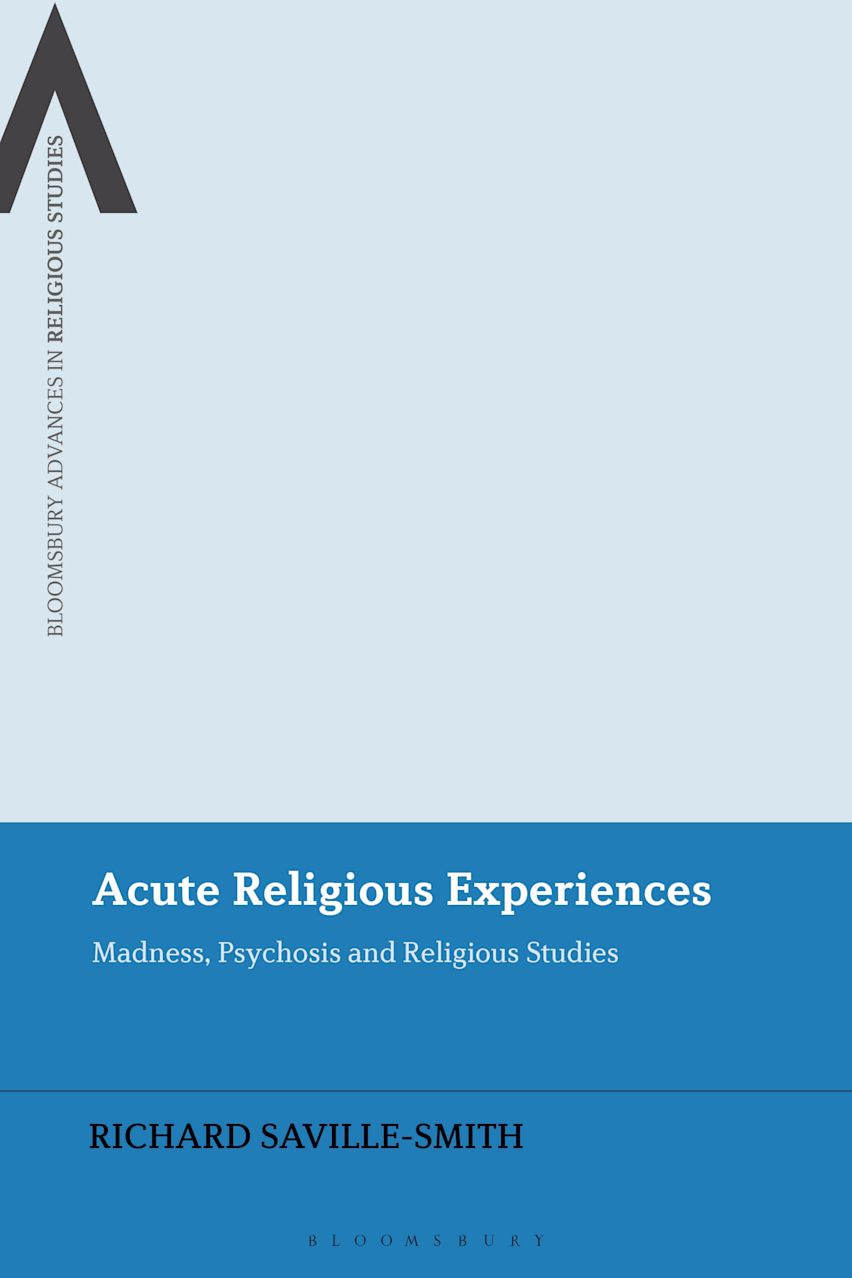
Ever since I read these words in Saville-Smith’s book, I have been chewing on how I would respond to them.
Saville-Smith frames the clinical encounter as a kind of epistemological tribunal. The patient, in a seemingly acute psychotic or manic state but also amidst a profound religious experience, is asked to give a rational account of themselves. They are expected to articulate, coherently and in words, an experience that is overwhelming and beyond language. As the psychiatrist observes for the behavioral markers of pathology, the very act of trying to communicate the ineffable in a setting designed to assess rationality inevitably produces the appearance of irrationality.
Saville-Smith is right in this regard. I acknowledge that the clinical encounter is not a neutral epistemic space. It is organized around particular assumptions about what counts as coherent self-presentation, and those assumptions can systematically disadvantage people whose experiences fall outside familiar frames, including acute religious experiences as well as states of madness.
There are experiences of madness that have nothing religious about them, and there are many spiritual, religious, and mystical experiences that have nothing mad about them (at least in a way that brings them to clinical attention). What Saville-Smith is talking about exists at the intersection of the two, and while it genuinely happens, it is a distinctive subset of both “madness” and “religious experience.” So I want to be clear that I am only talking about mad-and-mystical states, cases where the religious experience is legitimate (whatever it means for a religious experience to be legitimate) but also otherwise indistinguishable from mania and psychosis. From what Saville-Smith describes, this seems to be his situation.
I also want to affirm something that should not be controversial but still meets resistance in clinical settings: the experience of psychosis and mania can be, for the person undergoing it, phenomenologically rich and deeply meaningful. Saville-Smith describes madness as “the more, the numinous, the Shamanic consciousness, the mystical experience.” For him, these episodes are qualitatively the most significant experiences of his life. I take him at his word. Any account of psychosis that treats it as nothing but pathology, as mere noise in the signal, as experience evacuated of meaning, is clinically impoverished and philosophically naïve. I remember a patient from several years ago who had undergone a religious experience amidst an otherwise quite destructive manic episode, and the consequences of that spiritual experience outlasted the mania. He had been an atheist before and now believed in God. But he was also struggling to make sense of it, because his family members and the clinicians couldn’t see past the psychopathology of mania and psychosis.
So far, then, I am with Saville-Smith. But how do I, a psychiatrist, stumbling across these words in the middle of his book, answer him?
Let’s start with the question of truth. There is a conflation here between the experience itself and its epistemic authority. Saville-Smith describes his manic episodes as contact with the numinous, as mysterium tremendum fascinans, as something that overwhelms, terrifies, and fascinates. Psychiatry wrongs Saville-Smith by overwriting the voice of god with the presumption of psychosis.
This is a point that William James already understood in The Varieties of Religious Experience; mystical states carry a “noetic quality” for the subject, a sense of insight into deep truths, but this quality confers no epistemic authority on those who have not shared the experience. The feeling that one is in contact with ultimate reality is not the same thing as being in contact with ultimate reality.
How is it possible to persuade the psychiatrist that one is truly in the midst of an overwhelming and ineffable experience of god? The psychiatrist here is a representative of the clinical community as well as the society at large. How is it possible to persuade anyone (in a predominantly secular culture) that one is truly in the midst of an overwhelming and ineffable experience of god? What can Saville-Smith say that would persuade his mother? His neighbor? His childhood best friend? His lawyer? His GP? If he were in a court of law, how would he persuade the judge? There are always believers, of course. Every prophet and mystic has found some in the past. But that does little to budge the default skepticism our culture has towards the truth of mystical experiences. The experiences may constitute sufficient warrant for Saville-Smith, but they are his experiences. Others only have the stuttering, rambling testimony of an overwhelming and ineffable experience that looks and sounds very much like madness. A mystic’s private and inaccessible experience comes with no public obligation that others have to believe in its reality.

The reality of an overwhelming experience of the divine is, in some ways, a collective epistemic matter, something adjudicated within communities of interpretation. Even the world’s great mystical traditions have never simply accepted every claim of divine contact at face value. The Christian contemplative tradition, Sufism, the Hindu and Buddhist meditative traditions, all of them have frameworks for discernment, for distinguishing genuine spiritual insight from spiritual inflation, from ego-aggrandizement, from states that tradition itself regards as dangerous or misleading.
However, regardless of whether I as a psychiatrist am personally convinced or not, this is not a point that needs to be pressed in the clinical encounter. A psychiatrist sitting across from a patient in an acute state does not need to adjudicate the reality or unreality of the religious experiences (although unfortunately many are dogmatic or close-minded enough to do so). Saville-Smith writes as though the only obstacle to the acceptance of his experience is psychiatric dogma; as though, absent the clinical gaze, the experience would simply be recognized as what it truly is. The reality is that the epistemic challenge extends far beyond the psychiatrist.
If the truth question can be bracketed, and I think it can and should be in the clinical setting, then what remains? What is the psychiatrist actually doing when they intervene in an acute manic or psychotic state? As a psychiatrist, I am after a set of far more mundane and far more urgent questions. Can you exercise control over your behaviors and impulses? Can you discern what is happening around you in the mortal world? Can you keep yourself safe and out of danger’s way? Can you recognize your bodily needs? Are you behaving in ways that alarm the people who love you? Are your actions making you vulnerable to harm?
These questions are not the imposition of an alien, oppressive, rationalist authority. They are the questions that any social arrangement must navigate when someone enters a state of radical behavioral alteration or disruption. And Saville-Smith’s own account is candid on this point. He acknowledges that his episodes hurt the ones he loves. He acknowledges that the psychiatric system intervenes “for the benefit of myself or others.” He understands their good intentions. His complaint is not that the concern is misplaced but that the response is wrong, that psychiatry should help him “live his best life” rather than interfering with his brain chemistry.
I have considerable sympathy for this. Psychiatric intervention in acute states is often blunt, coercive, undignified, and inattentive to the experiential world of the patient. There is no question that we can do better. But the aspiration to do better is not the same as the aspiration to do nothing. And in cases similar to Saville-Smith’s, how can we take the patient’s report of “living his best life” at face value if it involves a prolonged state of profound impairment that the patient barely seems to acknowledge?
If not psychiatry, then what other social institution will take responsibility for a person’s well-being in such a state? The church may have, at one point. Hard to believe they will do so now, and hard to believe that the public will tolerate it even if they try. If you strip away psychiatry without replacing it with something, you do not get liberation. You get neglect, incarceration, homelessness, or a burden displaced onto family members. The alternatives to psychiatric hospitalization in our current social world are not freedom and spiritual community. They are the emergency room, the jail, and the street.
To his credit, Saville-Smith does have a constructive proposal. He suggests that psychiatry should learn from the world of psychedelic studies, should attend to “setting,” should help patients come down through their own volition, should assist with the integration of their experiences rather than suppressing them pharmacologically. This is an attractive vision, and there is indeed much that psychiatric treatment of psychosis can learn from psychedelics. The psychedelic therapy framework is built around the recognition that overwhelming altered states can be meaningful and dangerous, that the human organism needs scaffolding to move through them safely, and that the quality of the environment profoundly shapes the quality of the experience.
But the gap between a transient psychedelic experience and the reality of acute mania or psychosis in the community is also enormous. Psychedelic sessions are planned, time-limited, and voluntarily entered. Manic and psychotic episodes are none of these things. They escalate. People in manic states spend their savings, lose their jobs, destroy their marriages, endanger themselves physically, terrify their children. The state that Saville-Smith describes as the peak experience is, for the people around him, a crisis.
If Saville-Smith wants to remain in a state of heightened spiritual experience and wants the mental health system to make the experience “more beautiful,” and help him “come down through his own volition,” how do we know that this is possible on a timeline that is safe and feasible? In the US, for example, a court order for involuntary medication use often takes about 2-3 weeks at the earliest. If a person cannot come down through his own volition within that sort of timeframe, and if, in terms of impairment, the mad-appearing mystic is indistinguishable from the mad, what are we to do? Again, this is not simply a matter of convincing an individual clinician. It is a matter of convincing an entire society.
Saville-Smith describes, with considerable self-awareness, how he performs sanity in the hospital in order to secure his release. He describes this performance as exhausting and as an indictment of the system, evidence that psychiatry demands conformity rather than understanding. If Saville-Smith can modulate his behavior in this fashion, then the boundary between the manic experience and the capacity for self-regulation is not as absolute. He is not simply a mystic interrupted by the psychiatric police. He is someone who moves between states, who has learned from cumulative experience, and who possesses, by his own account, some capacity to navigate that movement.
And the performance of sanity is exactly what I expect sometimes from my manic and psychotic patients. The capacity to perform, the behavioral control needed to lie, is sometimes sufficient for a person to function outside the hospital. It shows they have enough awareness of what is going on around them that they can recognize what will get them in trouble and adjust their behavior. I do not always need delusional people to give up their delusions; they can hold to their cherished beliefs, as long as they can recognize that others around them do not share them. The performance of sanity can be enough. But it is surprising how often pretending to be sane is a prelude to becoming sane.
If the goal is to help someone move through an acute state with less coercion and more dignity, then the capacity for strategic self-regulation is a resource to be built upon. Good clinical work might involve helping someone develop the skills and supports to navigate altered states more safely, not by denying the meaning of those states, but by taking seriously the question of how to live with them in a world that includes other people, including skeptical and unpersuadable people. This, it seems to me, is closer to what Saville-Smith is actually asking for.
I don’t pretend that any of this resolves the tension Saville-Smith is pointing to. There is a good reason his words have stayed with me. The encounter between psychiatry and extreme experience is genuinely difficult, and the history of that encounter is an uncomfortable one. I have also been fortunate, as a young adult, to have been friends with self-described practicing mystics. I am not sure what to make of their experiences but I know they experienced something beyond psychosis. One of them, “N.,” now deceased (rest in peace, my brilliant friend), told me how, when she was just about entering adulthood, she had her first mystical experience. She told her parents, who, not quite sure what to do, took her to a psychiatrist’s office. N. laughed as she recounted this story, “The poor guy had no idea what to do with me.” She never went back as he didn’t have anything meaningful to offer her and she was never in a position where she had to be taken against her will. She was very articulate, educated, accomplished. Her encounters with mysterium tremendum fascinans had not come at the cost of her sanity. I don’t know what will convince me of the truth of such experiences other than a deep personal trust in an individual’s intellect and judgment. But I am always aware that someone like N. could be sitting in my office. And I’m always aware that the next time I’m on the inpatient unit, I could encounter someone like Saville-Smith. And I want to do better. I do not want to be the poor guy who has no idea.
Saville-Smith asks how it is possible to persuade a psychiatrist that one is sane in the midst of an overwhelming experience of god. I don’t think such persuasion is possible in most cases, but I also think that such persuasion is unnecessary. Psychiatry should be far more attentive to the meaning of acute religious experiences, even, and perhaps especially, when they coincide with manic and psychotic experiences. There is no reason to demand adherence to a disenchanted secular worldview as proof of insight. The field should work to pay attention to the “set” and “setting” of psychosis, minimize coercion and maximize dignity, and allow, as much as possible, for the spiritual dimension of psychosis. And it should remain available and needs to remain available (imperfect, blunt, fallible, but available; sorry Richard) for moments of grave impairment and disability.
See also:


As I had the benefit of reading an advanced copy before the publication of the book, it is possible that I may have been the first psychiatrist to have read those words.
A few thoughts:
We should be careful to distinguish, first, what options a clinician has in a perhaps overall shitty psychiatric system, and what the system could look like in the future. The latter question can be semi-utopian - what if we had a better welfare state overall, what if we had more resources - without imagining some completely utopian Star Trek society.
I talked a bit over social media with RSS, the last time he was hospitalized against his will. IIRC, he was hospitalized because he was behaving weirdly when grocery shopping and someone called the cops on him. He tried to explain that he didn't have a mental breakdown just now, he's permanently mad, he IS weird, but he manages, and then no one listened.
At hospital, he was forcibly injected with antipsychotics. He insisted over and over that he didn't need the injection and DIDN'T CONSENT but no one listened. I guess he was quite upset, but also, once you've been forcibly hospitalized, it might hard to convince anyone of anything EVEN IF you manage to speak in a way that would sound rational to an impartial observer (because most clinicians, at this point, are not impartial observers, they've already labelled you hopelessly crazy). Eventually, after enough time, he managed to perform well enough to be let out again.
(If RSS reads this comment, he can correct me if I misrememeber)
Seems to me that even in our current system, clinicians could do better. Listen more, not be so quick with the forced injections ...
Also, as you discuss already in the post - some clinicians do already accept that patients might hold radically different world views; what seems like evidence for "the Mainstream World" to the clinician might not be evidence to the patient. Some clinicians already accept this and focus on whether patients, in some pragmatic sense, can MANAGE themselves and their lives, regardless of beliefs. But then again, lots of clinicians don't. Constantly insisting, to clinicians and other people, that of course you KNOW WHAT'S REAL (their reality, no alternative version), becomes exhausting, and also does violence to your self-esteem in the long run. If I ever find myself back in mental hospital, I'm gonna say this again, for pragmatic reasons. But it would be better if we didn't have to.
More utopic future vision: At Paul Lodge's and my madness conference in Oxford in 2023, we had a couple of young Americans come speak about the "mad camp" they organized after they got out from mental hospital. At the hospital, they had been warned about the dangers of staying in touch with other ex-patients, because the clinicians worried they might drive each other mad again. Disregarding this advice completely, they organized this summer camp together. There, they worked out coping strategies together. Many different ideas, but one I remember, which is highly relevant to this post, was a sort of meditation where they tried to voluntarily approach a psychotic state and then draw back again. Researchers could look into such approaches and see if they could form the basis for new therapies that might be helpful to at least a subset of psychosis patients.
The one thing that I think the discussion regarding the epistemic dimension misses is that many religious experiences are communal and group in nature: think Durkheim’s collective effervescence. They are not solely subjective, but are social facts that can be recognized publicly; and in this sense hold universal validity.
Great piece though Awais.