


“… my account collapses the mad- versus- bad debate in a different way. If we set aside Abrahamic metaphysical assumptions and admit vice behavior as just another kind of human problems worthy of scientific understanding, treatment, and prevention, then ‘bad’ points to domains of experience and behavior that can be pathological like any other domain.” (p 496)
“If we accept that criminal/ immoral conduct is subject to being disordered and criminal justice shifts toward nonpunitive rehabilitation and public protection, then the insanity defense debate disappears, as does the need for a differential social welfare response. If all antisocial conduct is subject to rehabilitation, then the silos of adult and juvenile criminal justice/ mental illness/ intellectual disability disappear and the focus on restoration of prosocial and healthy conduct becomes the overall goal for social welfare institutions.” (p 509)
John Sadler, Vice and Psychiatric Diagnosis
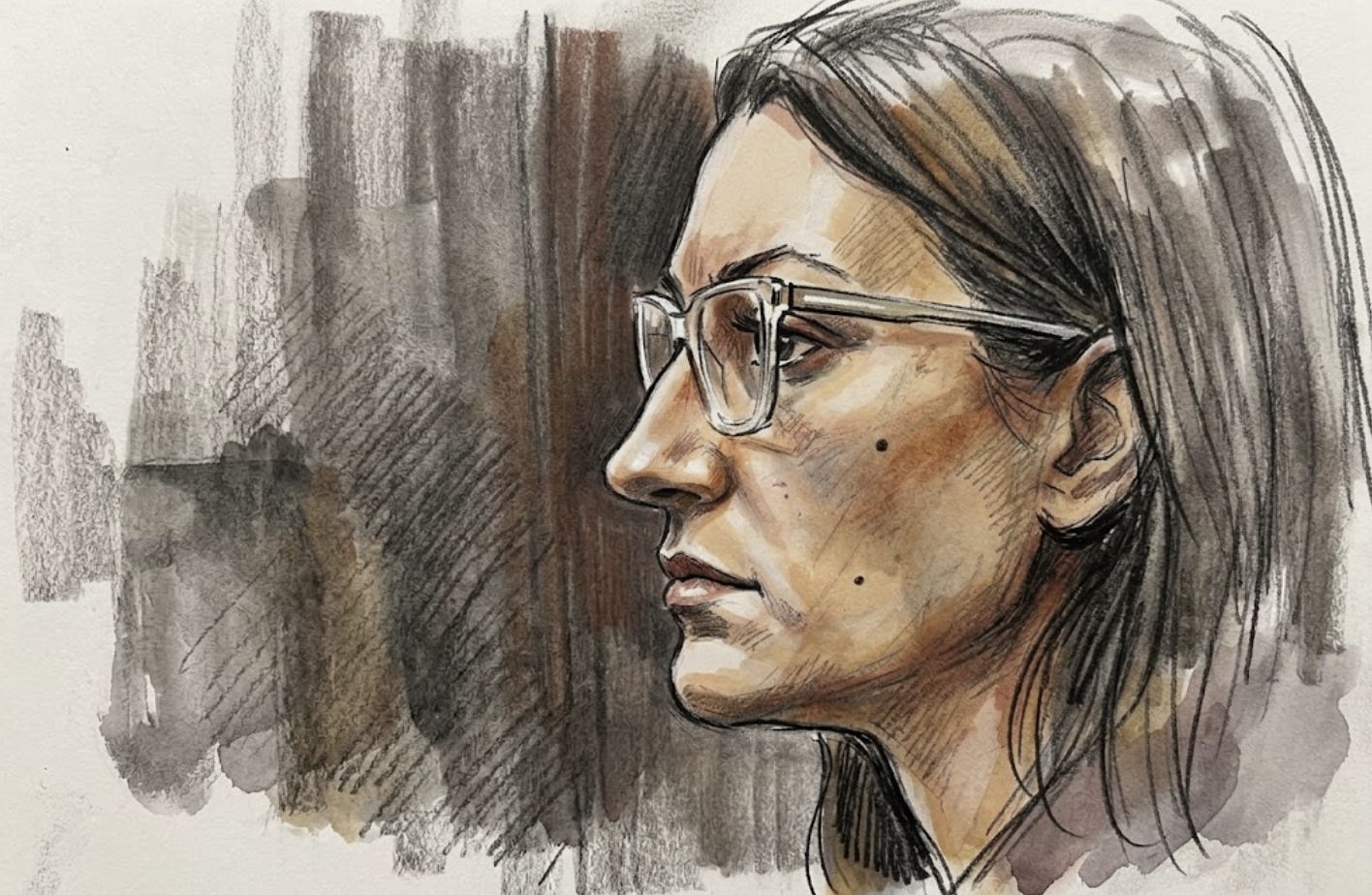
As I write this post, the jury is deliberating in the case of Lindsay Clancy and has not yet come to a verdict. The choice is between finding her criminally responsible for the deaths of her three children versus finding her not guilty by reason of insanity. Social media and the blogosphere are awash with hot takes of all sorts. Whether Clancy goes to prison or stays at the state psychiatric hospital rests on whether the jury believes she possessed the capacity to appreciate the wrongfulness of her actions or conform her conduct to the requirements of the law, the legal standard in the state for the insanity defense.
In the middle of this obsessive focus on whether this legal standard for the insanity defense is met or not, it is easy to forget the constructed, fallible, human nature of this standard. It was not given to us by God. It is not a principled differentiation of conduct based on a scientific understanding of human behavior. The insanity defense is the product of a human society trying and fumbling to reconcile our desire for punishment—for retribution, for the offender to suffer, for harm to be inflicted in a manner proportionate to their wrongdoing, an eye for an eye—with the awareness of human behavior as a complex, multicausal process, one vulnerable to mental illness.
Whatever capacity Clancy possessed at the time of the crime, whether she was psychotic or not, it is clear that she was psychologically struggling and was severely suicidal. A devoted, loving mother, in the grips of a state of suffering few of us can even fathom, took the lives of her 3 children before attempting to take her own, an attempt that left her paralyzed, and she survived only because of advanced medical care available in the modern world. What does a woman like that “deserve”? What does it mean to determine and declare that she deserves punishment instead of treatment, or vice versa? Who the fuck do we think we are?
Psychiatrist John Sadler has argued in his 2024 book Vice and Psychiatric Diagnosis that the insanity defense is rendered unnecessary in an ideal world. “A nonpunitive, rehabilitative criminal justice system and criminal court obviates the need for an insanity defense,” is how he puts it. The NGRI verdict—Not Guilty by Reason of Insanity—exists in our world only because retribution exists. Retributive punishment works by rectifying a moral harm by inflicting more harm, and in a world without retribution, there is nothing left for an offender, mentally ill or otherwise, to be excused from.
Criminal responsibility rests on “Abrahamic” folk-metaphysical assumptions about free will, individual responsibility, and just deserts. The scientific worldview presents a picture of behavior as a complex, multicausal outcome with many determinants. “people act wrongfully under complex interactions with environment, personal history, and personal biological endowment.” (Sadler, p 495)
The “mad” vs “bad” dichotomy exposes the faultlines of this juxtaposition. We desperately want to hold on to the fiction that some states of madness can excuse badness but other states of madness cannot. We recoil in horror when cases like Lindsay reveal the façade of this distinction. A mentally ill woman kills her children and we confront the absurdity of mad vs bad. Our judgments here are driven more by vengeance, political posturing, and fear-mongering than by an appreciation of how things really are.
In Sadler’s vision, the psychiatric state of mind of a person is relevant to what needs to happen to rehabilitate the offender, but it is not relevant to the verdict of guilty itself. If a mother has killed her child amidst suicidal depression or psychosis and if “retribution” no longer exists as an option, what is left is rehabilitative intervention. Whether she should be in a psychiatric hospital or in a place like prison becomes a pragmatic and predictive question: which setting will most successfully ensure rehabilitation while also protecting the public? It follows from the particulars of clinical and criminological judgment. Folk metaphysics is fine for everyday life, but when the stakes are high, Sadler contends, our decision-making has to be based on complex, multicausal accounts of human behavior.
That this proposed state of affairs is aspirational is an understatement. Most of us can barely imagine a world without retribution. I sometimes doubt if humanity is even capable of it. A world in which criminal conduct, including criminal conduct under the influence of mental illness, is approached in the same manner as we approach medical errors and failures of aviation safety, is indeed possible. Whether that ever becomes a reality is a different question. But as the jury deliberates and as Clancy exists in a superposition of being guilty and not guilty by reason of insanity, I’d like to dream of a world with a nonpunitive, rehabilitative criminal justice system that has rendered the insanity defense unnecessary.
See also:

I was just thinking about this case on awakening this morning, after briefly discussing it with a friend who is not only a professor of criminology but who also has a master’s degree in psychology and who once worked in a psychiatric hospital. She knows my transgender daughter who lives with schizophrenia. The biggest thing that strikes me about our criminal justice system is how absurd its decisions can seem, and that is particularly the case when psychiatric illness is on trial. I think too many jurors are all too certain in their beliefs about evil. As Bertrand Russell once said or wrote, “the trouble is that in the modern world the stupid are cocksure while the intelligent are full of doubt.” (Note: Not long ago, I read an article by an author who advised using the word “cruelty” instead of “evil” to unload the metaphysical baggage.)
Bertrand Russell, like Robert Sapolsky today, was a believer in hard determinism which argues that we have no free will and are therefore not responsible for our own actions. Daniel Dennett, a compatibilist, believed in a softer determinism that leaves room for free will, as he defined it—an ability to learn society’s values and responsibilities so that we apply them as ethical agents, calling upon those learned behaviors stored in our adult brains. Dennett’s thinking about this appeals to me in an age of cold techno-libertarianism. And, I think Sadler’s challenge as described here is based on a belief that society is good and it can do better. It is an “ethics of knowledge” about human behavior that he seems to propose along the lines of what Jacques Monod wrote generally in a closing chapter of his classic book, Chance And Necessity, which was surely influenced by his friend Albert Camus. Now, I better go read Sadler’s book.
Not that the DSM is any paragon of compassion, but it would help if the next revision restored postpartum psychosis to its former status as a standalone diagnosis like schizophrenia and bipolar disorder so that our imperfect and retributive justice system might at least learn to take PP seriously.