


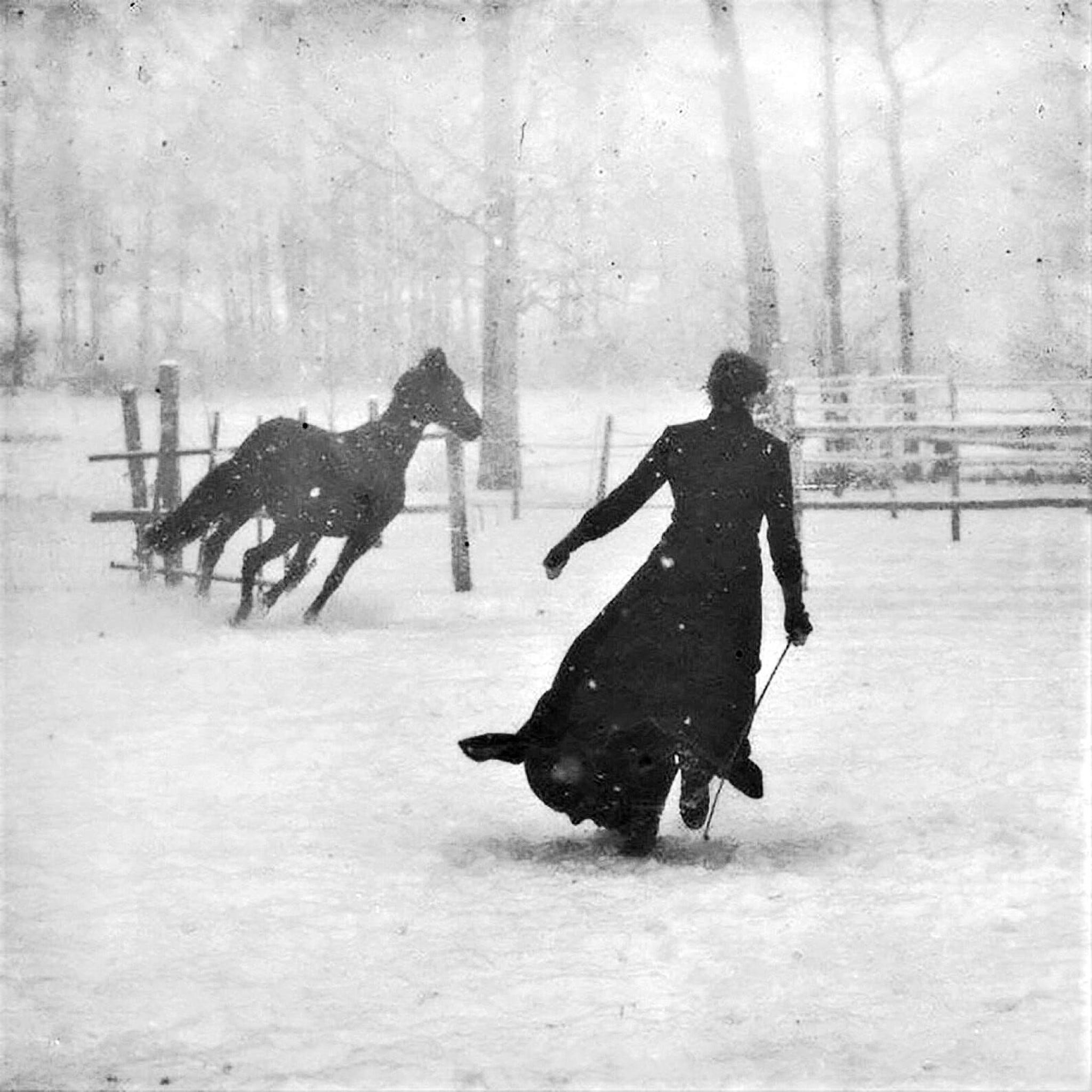
Sam Kriss in What’s the point of words? offers the best commentary on the analytic vs continental philosophy debate that swept Substack a few weeks back:
Once you’ve established that language is not a perfectly transparent vehicle for the neutral description of facts, you can’t then attempt to just neutrally describe that situation… You have to engage with the system of words on their own terms.
So: language has betrayed us. Now what? What can language do, besides simulate reality? There are the various perlocutionary acts, persuading, forbidding, seducing, offending, and so on. Language mediates social games and forms the structure of subjectivity. It throws up its own internal problems that can be solved or expanded for fun and profit. It has a shibboleth function, which allows you to distinguish between friend and enemy based on whether they use words like hegemony or not. Some of these intersubjective functions are not always particularly positive, and definitely not useful to philosophy. But others are. We can still use language to access objective reality, as long as we’re prepared to let it take a more active role than straightforward description. Language, and especially philosophical language, changes how the world discloses itself to us.
The only remnant of the grand analytic experiment is the vague sense that it would be nice if language could clearly account for reality, and it’s virtuous to keep on pretending as much as possible that it can, even though it can’t. But there is also a ritual. Every so often, the survivors from the shipwreck of analytic philosophy all gather round to shriek at Judith Butler’s terrible, terrible sentence. Sure, all our attempts to clearly express the world in language ended in failure—but get a load of these guys! It’s like they’re not even trying.
Tom Pollak tackles some difficult questions about AI neurosis with his characteristic sophistication. The age of neurotic AI is here. Or: how a LLM having a panic attack taught me to love myself
Chater’s argument is that introspection is always improvisation: we generate explanations in real time and then experience them as if they were read-outs from depth. The mind’s apparent interior behaves like a narrator producing plausible continuations rather than an instrument panel that actually displays anything corresponding to the underlying mechanisms. We interpret our physiological states and we construct a plausible narrative to explain them. Introspection is fully illusory, for us as much as for LLMs.
If that picture has any truth, it changes how this Gemini transcript should be read and the distinction between “real” and “simulated” neurosis collapses. The text can be socially meaningful but still remain a poor guide to the underlying generative dynamics that produced it. But is it causally potent? I’m not sure that question has ever mattered as much as we think it does. Human rumination already occupies this awkward - and causally fairly uncertain - space.
See also: Pollack’s thought experiment: What shape is your mind?
Also, I hate to say this, but I think some of your devotees made your modality stupid. My personal conviction, based on observation of various gurus and modalities, is that whatever wisdom is in a given modality is actually mostly in the practitioner. I believe that you have helped patients, I believe that Otto Kernberg has helped patients, I believe Janina Fisher has helped patients, to name a few. I don’t believe that many of their trainees help patients with anything like the frequency or degree of efficacy that the teachers did. (I once had a therapist who was trained by Janina Fisher herself who did some of the stupidest therapy on me that I’ve ever received, and I’ve received plenty. You get the point.) Most people who say they do DBT don’t do the real thing, and this would be true even if DBT to fidelity weren’t so intensive and difficult to practice—something here about maps and terrain. DBT seems, based on the pedestrian knowledge that I have, to be a wise modality based not only on Scientific Evidence, but on your own experience surmounting the insurmountable. Good luck putting that in a manual and having it withstand MSWs who have never really suffered.
Jesse Meadows has done exceptional work on Sluggish this year. My favorite is: Why I’m Trying Psych Meds Again, and how I’ve changed my mind about their critics
Reading these thinkers caused me to view scientific studies through this lens, and it made me cynical as hell. It was intellectually limiting — I was no longer curious about studies of the brain and its chemicals, but immediately trying to find fault with them so I could retain my worldview.
This meant that my ideas couldn’t evolve, which is what has happened to Timimi and Moncrieff — they’ve made the same arguments, over and over for decades now, never updating or adjusting, but doubling down no matter what. I don’t want to be that kind of thinker, or person in general.
Probably the most influential factor in changing my mind, though, was developing a genuinely therapeutic relationship with a doctor. One who is honest with me about drugs, including their limitations and their risks, who does not answer the phone in my face, or get annoyed when I ask a lot of questions, or roll her eyes and sigh when I bring up what I’ve been reading, but is actually, genuinely interested, and even directs me to good research papers.
Jesse’s review of Sami Timimi’s book is also a delight. Are We All Just Having ‘Understandable Human Reactions’? Sami Timimi’s new book paints neurodivergent and trans people as dupes of neoliberalism
After reading [Timimi’s] new book, though, I have realized: critical for me means, let’s ask more questions about who gets to call the shots. Critical for Timimi means, if there’s not a specific biomarker that correlates with a specific diagnosis, then you’re all just having a collective hallucination!
Sasha Gusev, The missing heritability question is now (mostly) answered: Not with a bang but with a whimper
twin studies produce a ~2x inflated estimate of narrow-sense heritability when compared to molecular estimates that are free of environmental confounding. The mystery of twin heritability comes to an ignoble end: no massive tranche of rare variants, no phantom interactions, just inflation.
Franny Talks Freud writes about psychoanalytic considerations around sibling dynamics. On Siblings:
Sibling dynamics can show up in interesting ways in the transference, of course. There is the anguish of realizing the therapist (mother or father) has other children (patients) and the subsequent felt hatred towards the “competition.” I’ve found there is often a desire for patients to be the preferred sibling, in some way. The wish to know that they are, in fact, special, and not just another “mouth to feed.”
But perhaps less talked about in psychoanalytic literature is sibling transference. A patient who is around the same age may unconsciously see us as their rival. I wonder if this is sometimes confused as vertical/Oedipal, when really it’s a reliving of something on the lateral axis.
In the end, as with most developmental phenomena, we are perhaps left to sit with something unresolved. I may always, unconsciously, fear that I murdered my brother. There were moments I wanted him gone, after all, when I was little. And now he is gone, forever.
It is shameful to admit that I don’t want to give up being borderline. But I want to want it. I know that sounds absurd, but once I truly give it up I’ll cease to exist. I’ve spent so long as two halves that I’ve never truly been whole. The woman that is Autumn without insanity has to destroy the old self. I was right when I told my other self that it could die. But really, we both had to die.
I know what it’s like to live in constant, benumbing pain. I don’t know what it’d be like to live without it. The thing I have to become is alien to me. Who would I be when I’m no longer victim and monster, innocent and terror? Who would I be without the constant self deception and sabotage, the rage and the dark?
Michael Halassa discusses the recent neuroimaging study that reported that stimulant medications primarily affect arousal and reward processing networks instead of attention networks in the brain.
Now onto the second issue: “attention”. This word means different things in different contexts. In ADHD diagnostic criteria, “inattention” means not staying on task, getting distracted, forgetting instructions. These are problems with sustained engagement and persistence. By contrast, in cognitive psychology, attention refers to selective amplification of relevant information, like covertly allocating processing resources to a small patch of visual space (e.g. in a Posner cueing task; see figure below) or selectively increasing focus to one out of several conversation in a crowded room without actually moving your head (the cocktail party problem). That is not what people refer to when they are discussing “attention” in ADHD. The imaging results therefore line up pretty nicely with the clinical meaning of attention in ADHD, which is about sustained engagement rather than selective processing.
I question the role of psychiatry and psychotherapy in finding these moments of plasticity in someone’s life. My revelation in Alaska, where I was inundated with the feeling of being helpful, mattering, being liked, was so profound because it was spontaneous. No one could have planned or prescribed that experience, no hospital could have simulated it- it just had to happen.
What we can do as clinicians is to recognize the importance of these moments, and remain curious about the possibilities for healing the world might provide.
Mel in The Mel Jar, “Kill Your Darlings”: analysis, diagnosis, countertransference, and the Imaginary
In my opinion, it would be best if we all learn to do this — to question our own framings. To develop the skill and insight to see them as incomplete, or in need of total revision. To understand that no matter how clear, thorough, or “objective” we have consistently attempted to be, that everything is indeed a construct, a narrative of convenience, a “just so” story of the Imaginary.
No matter how artful or elegant, no matter how much clinical utility is has, no matter if we like it very much, and our patients like it very much, and if we have become publicly identified with it — maybe written a bunch on it, won awards off of it, gotten famous off of it, built a whole career off of it — all of it is a conjecture, a hypothesis, and/or a “theory,” not “fact.”
Orestis Zavlis unpacks the argument that personality disorder is not about personality traits, because traits are about all psychopathology.
We can therefore see that even when we categorise most psychopathologies in terms of personality, we still end up with the following non-personality categories: the emotional disorders (neuroticism), the impulse disorders (disinhibition), the cognitive-perceptual disorders (psychoticism), and the relational disorders (antagonism and detachment). Astute readers may, at this point, have noticed that this organisation matches the well-known organisation from the hierarchical taxonomy of psychopathology (HiTOP)…
This equivalence suggests that there is nothing unique about the association between personality traits and the putative disorders of ‘personality’. Instead, all psychopathologies are invariably associated with personality traits that match their underlying pathologies. In that sense, all psychopathologies both are and are not personality pathologies.
Erik Hoel’s analysis of overfitting and cultural stagnation. Our Overfitted Century: Cultural stagnation is because we’re stuck in-distribution
Overall, I think the switch from an editorial room with conscious human oversight to algorithmic feeds (which plenty of others pinpoint as a possible cause for cultural stagnation) likely was a major factor in the 21st century becoming overfitted. And also, again, the efficiency of financing, capital markets (and now prediction markets), and so on, all conspire toward this.
People get riled up if you use the word “capitalism” as an explanation for things, and everyone squares off for a political debate. But, while I’m mostly avoiding that debate here, I can’t help but wonder if some of the complaints about “late-stage capitalism” actually break down into something like “this system has gotten oppressively efficient and therefore overfitted, and overfitted systems suck to live in.”
Psychotherapy operates by modifying patterns of thought, emotion, and behavior through guided reflection, practice, and interpersonal feedback. The same processes that facilitate recovery can, depending on patient characteristics or therapeutic context, also contribute to distress or symptom worsening. Almost half of treatments result in an unwanted effect. Severe effects occur in about one out of ten cases.
Arjun Gupta on how psychotherapy has become a “status symbol” in India. Therapy was co-opted to serve as a signal of emotional intelligence, and now there’s a backlash brewing.
For every status symbol, there is a counter-symbol. For every mainstream culture piece, there is a counterculture that develops in opposition to it… The same thing happened to therapy, too. It’s actually happening right now.
“Therapy? That’s just something the rich kids need. There’s nothing a night out with friends cannot fix.”
Everything seems better and cheaper than therapy if you scroll through social media.
“Ice cream is cheaper than therapy.”
“Shopping is my therapy.”
“Who needs therapy when we have the mountains?”
These sentences may seem like a simple misunderstanding of the therapeutic process, but they reveal a sense of rebellion — a rebellion against the status symbol that is therapy. A mini-resistance against the world telling you to visit a therapist.
The frustration that I have, with most of these critics [of capitalism], is that if you gave them a menu of feasible options for organizing a complex economy and asked them to pick one, the vast majority, after a bit of foot-dragging, would choose some form of suitably regulated market economy with a generous welfare state. So then what is the point of all the bluster about capitalism, if you don’t intend to do anything about it? It just seems like an idle complaint. More specifically, it seems like kvetching…
Martin Greenwald, M.D. presents the curriculum details of a hypothetical psychiatry fellowship, The Inpatient Psychiatry Fellowship I Wish I’d Had in Residency
I find it odd that psychiatry does not have an established fellowship for treating our sickest patients, regardless of which diagnostic silo they happen to fall under (this would be vaguely analogous to not having ICU/Critical Care fellowships for internal medicine residents)… As an inpatient psychiatrist my bias may be showing, but I am convinced the greatest social demand for our profession right now is in treating the severely and chronically mentally ill. It is a national problem and the cards are stacked against us. For one thing, we lack institutional support for anything resembling serious treatment, including long-term and asylum care (much touted “community treatment” only works if there’s a decently functioning community for the patient to go back to). To make matters worse, since the downsizing and closing of most long-term psychiatric hospitals we have lost inestimable knowledge accrued over the generations by those who spent their lives treating these patients.
John Mandrola shares a list of 45 things he believes, What I believe in Medicine.
I will bet you two espressos that quality improvement initiatives reduce quality.
When in doubt, go see the patient.
Nearly every treatment recommendation in modern medicine is preference sensitive. Never say someone “needs” anything. People need food and water. Almost everything else is sensitive to patient preferences.
I wonder if perhaps these euphemisms are nothing more or less than manifestations of trauma-brain: synonymous with pathological (if understandable) attempts to control and police the external in an attempt to soothe the chaotic rage, fear and sadness within. The world must change, because I’m scared I can’t.
The loss of trust in self, others, and the world so often found in trauma, packaged up in emoji form.
After all, what is trauma but profound inability to bear and process the knowledge of what happened to you? What is recovery but having the words to say it, making a picture from the fragments, piecing yourself together, and being able to look at what you find and realise you survived?
Gurjot Brar and Elena Bridgers in Evolution and Psychiatry. Evolutionary Mismatch and Modern Motherhood: Elena Bridgers on alloparenting, postpartum mental health, and what research on hunter-gatherers reveals (and much more)
Bridgers: “At the risk of sounding a bit corny or new-agey, I feel like studying hunter-gatherer societies has been a kind of awakening for me. It has totally changed my paradigm, not just the way I think about motherhood, but about the way I think about all of Western society, and about what I value. We are very individualistic in our culture, and I don’t think it’s healthy. We pathologize any kind of interdependence, but humans are a social and interdependent species. Hunter-gatherer societies are incredibly care-oriented relative to Western society, where we tend to view care as a burden. Studying these societies has helped me lean into motherhood more, lean into my relationships more, and let go (at least a little bit) of the achievement/productivity focus that drove most of my young adult life.”
Whenever I read biographies of famous scientists, I notice that a) they’re all pretty weird, and b) I don’t know anyone like them today, at least not in academia. I’ve met some odd people at universities, to be sure, but most of them end up leaving, a phenomenon the biologist Ruxandra Teslo calls “the flight of the Weird Nerd from academia”. The people who remain may be super smart, but they’re unlikely to rock the boat.
David Bessis, The curious case of broken theorems: Mathematics shouldn’t survive logical errors—yet it does
Meaningless formal systems should break down like Prince Rupert’s drops, these toughened glass beads that are unbelievably resistant, until you snap them at the right place and they explode into powder.
By contrast, real-world mathematics breaks down like pottery. As a whole, the mathematical corpus is a giant, collaborative work of kintsugi, the Japanese art of pottery-fixing. The whole thing started off as unstructured clay and was made hard by our very hand.
In my mind there are two ways to resolve whether the autoantibodies found in first episode psychosis patients are indeed pathological. The first is to screen large numbers of patients using lumbar puncture to obtain cerebrospinal fluid. This has been advocated by Belinda and Tom but it would require a change in clinical practice and is a logistical challenge. Most patients I see who are acutely psychotic would lack capacity to consent from a somewhat invasive procedure with uncertain benefits. The second is to do what we always do to resolve clinical equipoise, a randomised trial.
A detailed discussion of a 2022 meta-analysis by Henssler et al. that also serves as an excellent primer on heterogeneity, tau, and random-effects models in meta-analyses.
We should now understand that random-effects models will heavily downplay the effects of large, precise studies and amplify the effects of small, imprecise studies with large effect sizes.
In psychotherapy, the real reason a person comes is not always clear—not to us, not even to them. They may have no words for it, only a diffuse sense that something is wrong. It may take months to surface, often in what seems like a sudden revelation. But that moment is the culmination of months of work.
(Carl’s response to my Asterisk magazine article on the DSM)
Simply put, DSM-III gave psychiatry a common language that made its categories useful to insurers, researchers, epidemiologists, regulators, and pharmaceutical companies—and, soon enough, seemingly, to the rest of humanity. Once diagnosis became the shared language of research, clinical practice, and marketing, it naturally filtered into popular culture. That alignment of powerful forces—science, policy, commerce—is what made diagnosis culturally significant. Without that, the DSM is just a bunch of definitions in a book that few people bother to read. With it, DSM-III is instrumental in research, insurance coverage, public policy, law, self-understanding, and the day-to-day practice of medicine.
Seen through this lens, the persistent debates and disagreements in psychiatry are not failures to be eradicated but opportunities to practice agonistic pluralism. In Mouffe’s sense, pluralism is not about diluting differences in pursuit of consensus; it is about institutionalizing spaces where dissent is legitimate, and disagreement is recognized as a driver of critical thought and democratic vitality. By accepting the legitimacy of multiple perspectives—whether naturalistic, phenomenological, hermeneutic, or social—psychiatry can move toward a culture where differences are negotiated, not suppressed, and where patients, clinicians, and researchers can engage in ongoing, respectful struggle over meaning, evidence, and values.

As a little treat for scrolling all the way to the end, here are some personal media favorites from 2025.
Music album: “Lux” by Rosalía. Pop music with a touch of the divine, unlike anything I’ve heard before.
Fiction: “There Is No Antimemetics Division” by qntm. An unforgettable sci-fi horror about an organization that combats “antimemes,” phenomena that resist being remembered and recorded.
Non-Fiction: “Elusive Cures” by Nicole C. Rust, on how neuroscience is responding to failures of the bench-to-bed pipeline (see my review here), and “Shamanism” by Manvir Singh, a fascinating exploration of shamanism throughout human history.
TV shows: “Pluribus” (Apple TV), innovative story with strong performances; “Andor,” season two (Disney), a solid final season that seals Andor’s track record as an exceptional show; and “The Pitt” (HBO Max), one of the best medical shows ever.
Film: “Train Dreams” (directed by Clint Bentley), an elegant meditation on life and loss
The 6 most popular posts from 2025 on Psychiatry at the Margins
Per the Substack algorithm (which appears to use some combination of likes, views, and shares)
Confessions of an Ambivalent Psychiatrist, guest post by Susan T. Mahler, MD
Schizophrenia Is the Price We Pay for Minds Poised Near the Edge of a Cliff
Rich Girl Rehab, guest post by Sorbie
Groundbreaking Analysis Upends Our Understanding of Psychiatric Holds
Thanks so much for the mention, especially on one of my more esoteric pieces. Much appreciated!
I'll join the rest of the rabble thanking you for the citation!